The modern workplace is evolving. Today’s best offices are no longer defined only by square footage, finishes, or furniture. They are being measured by how they make people feel, perform, and connect. That shift is one reason biophilic design has become one of the most influential workplace trends in recent years.
Biophilic design is the practice of integrating natural elements into the built environment to strengthen the human connection to nature. In office settings, that can mean anything from maximizing daylight and incorporating greenery to using natural materials, calming textures, and organic forms.
What was once seen as a design preference is now emerging as a business strategy.
Why Biophilic Design Matters More Than Ever
As companies continue navigating hybrid work, talent retention, and workplace utilization, offices need to offer something employees cannot get at home. The workplace must become a destination that supports collaboration, culture, focus, and wellbeing.
Industry sources continue to identify wellness-driven environments, flexible layouts, and biophilic elements as leading office design priorities for 2025 and beyond. Employers are increasingly investing in spaces that reduce stress, support productivity, and improve the employee experience.
In simple terms: people want spaces that feel better to work in.
Top Biophilic Design Trends for Workspaces
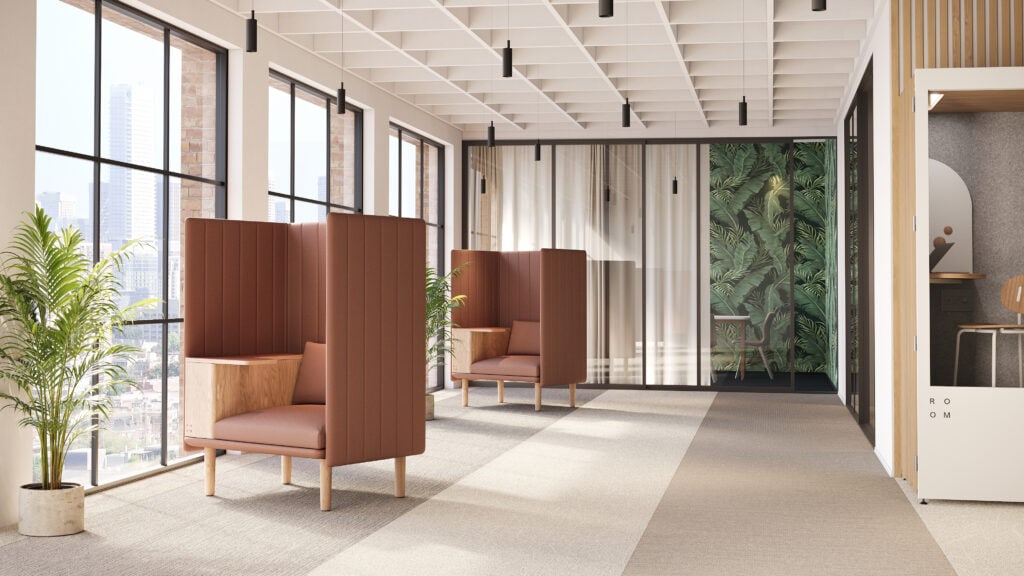
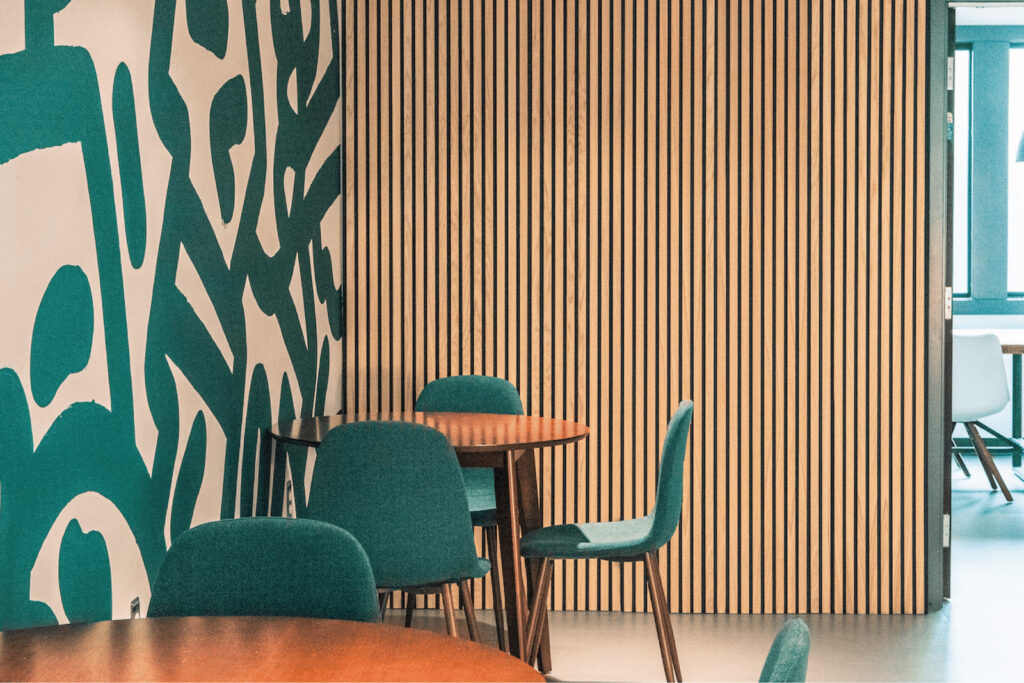
1. Nature Beyond the Plant Wall
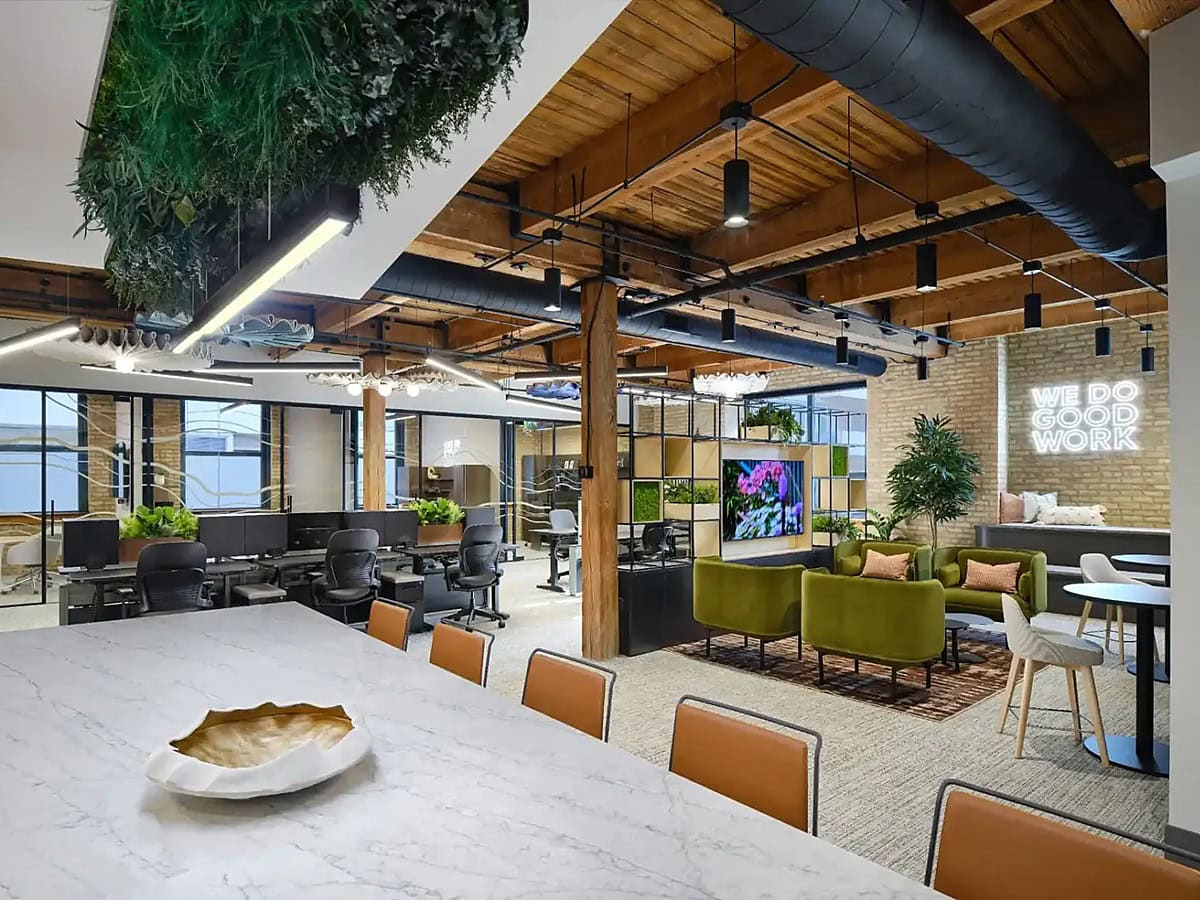
Biophilic design has matured beyond adding a few plants in the lobby. Today’s most effective workplaces create a full sensory connection to nature through:
- Living walls and integrated greenery
- Natural wood, stone, and woven textures
- Earth-toned palettes
- Water-inspired materials and finishes
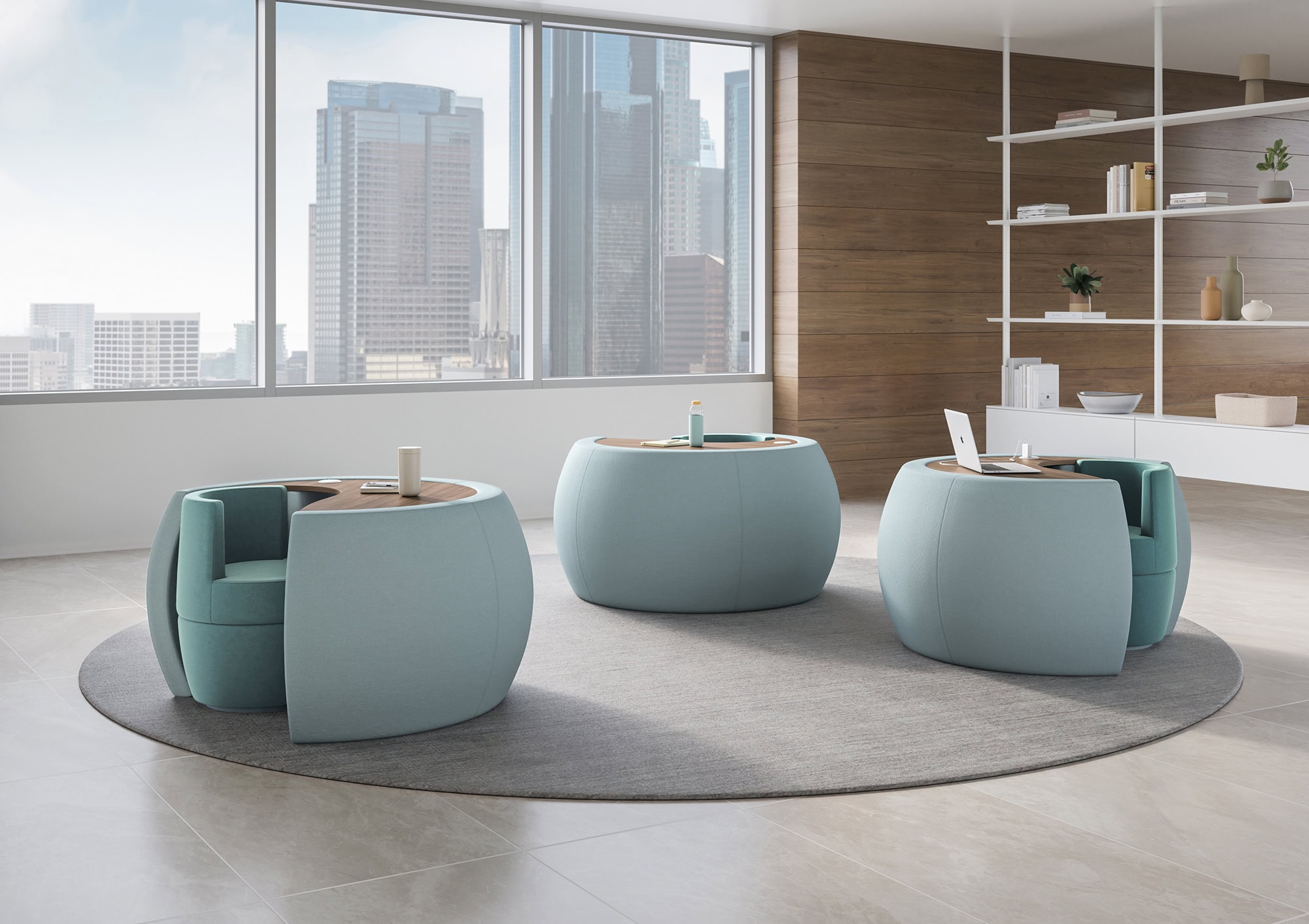
- Organic shapes and curved forms
This creates environments that feel warm, calming, and human-centered.
2. Daylight as a Design Priority
Natural light is one of the most requested workplace amenities. Companies are rethinking layouts to allow daylight to travel deeper into the floorplate using:
- Glass fronts and partitions
- Lower workstation profiles
- Open collaborative zones near windows
- Light-reflective surfaces
A brighter workplace can help improve mood, alertness, and overall satisfaction.
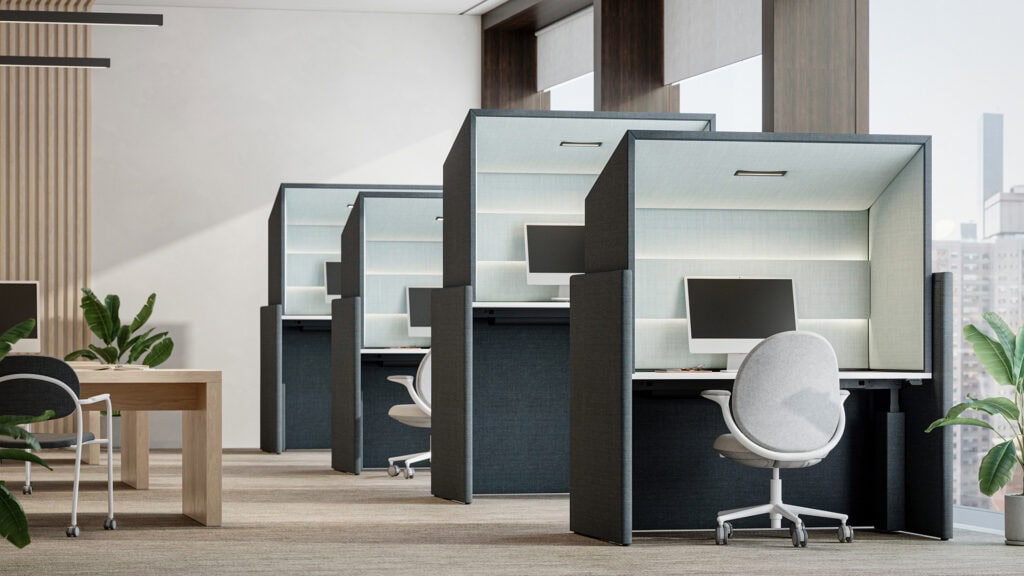
3. Wellness Rooms and Quiet Retreat Spaces
Today’s employees need a variety of settings throughout the day. Forward-thinking offices are incorporating restorative zones such as:
- Quiet focus rooms
- Wellness or meditation rooms
- Recharge lounges
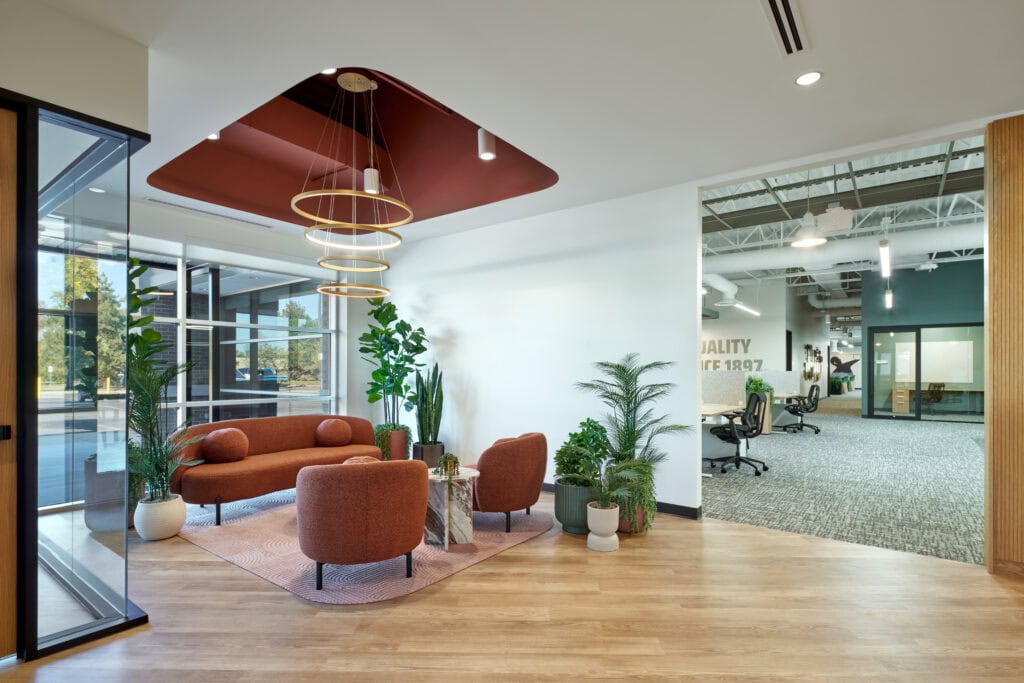
- Soft seating nooks surrounded by greenery
These spaces support mental clarity while giving employees more control over how they work.
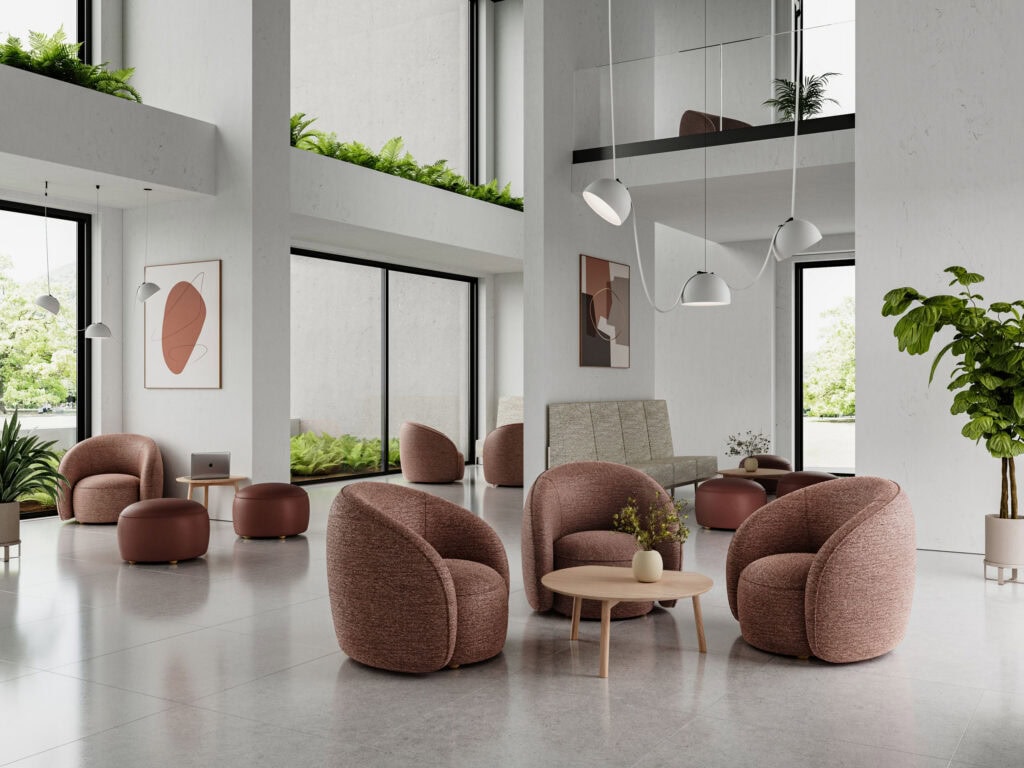
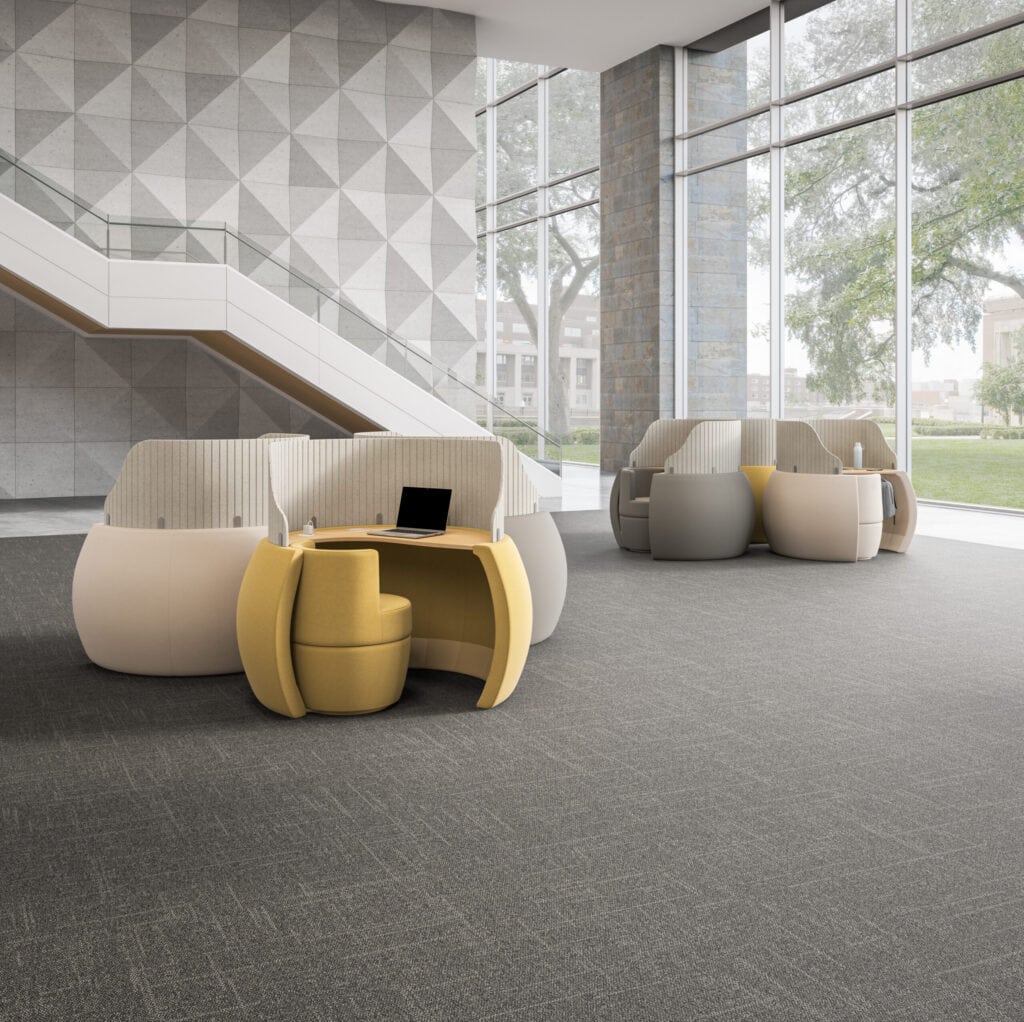
4. Modular Spaces with Natural Influence
Flexibility remains critical in hybrid work environments. Leading organizations are combining modular layouts with biophilic principles through:
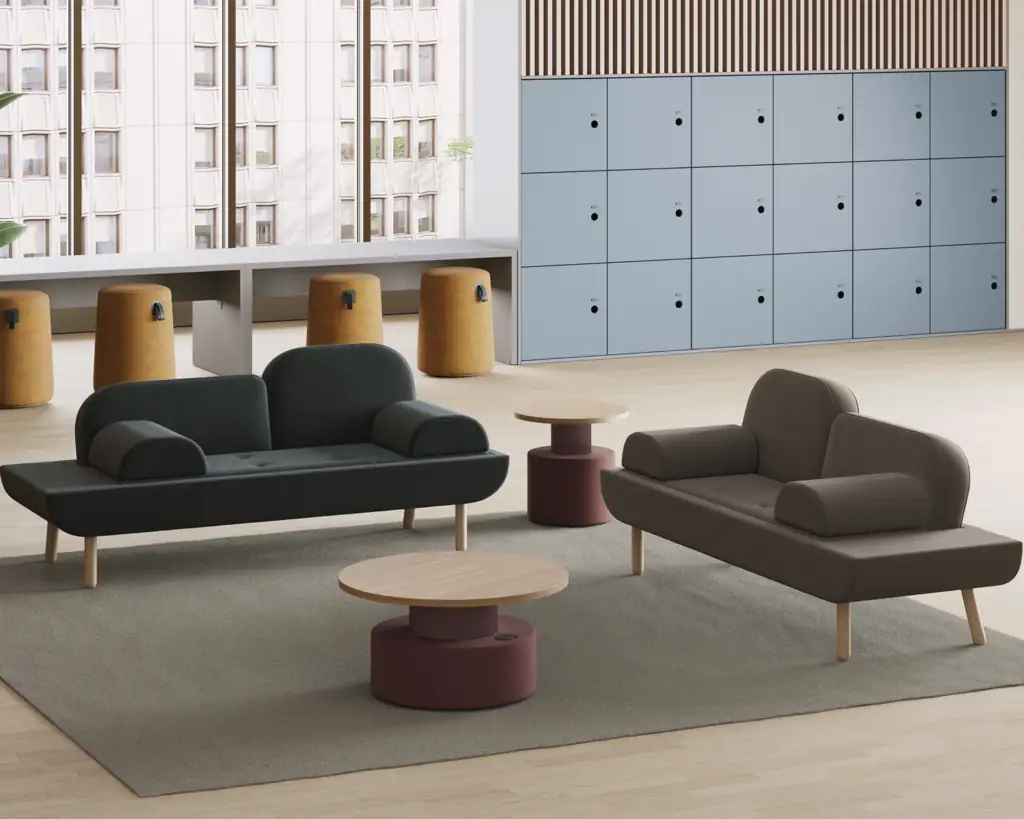
- Moveable furniture in natural finishes
- Planter dividers that create zones
- Multi-use collaboration areas
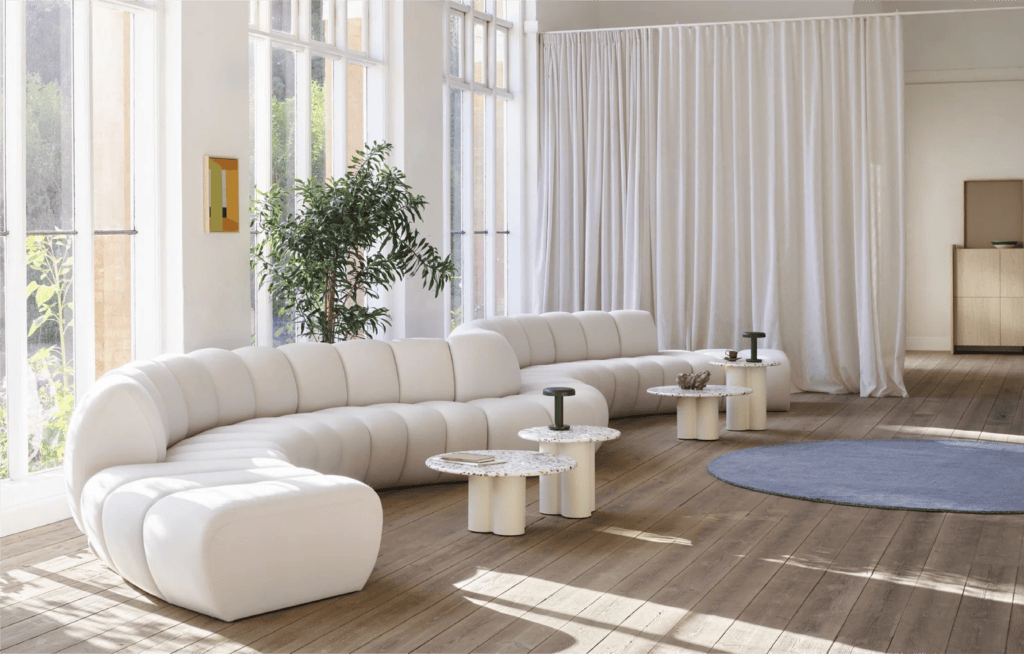
- Adaptable lounges with residential comfort
This allows teams to reconfigure space without losing warmth or personality.
5. Sustainability and Biophilia Working Together
Biophilic design and sustainability naturally complement each other. Many companies are pairing nature-inspired environments with responsible sourcing through:
- Recycled and low-emission materials
- Energy-efficient lighting
- Sustainably certified furnishings
- Reuse of existing furniture assets
- Indoor air quality improvements
This approach supports both employee wellbeing and ESG goals.
Thought Leadership Perspective: Biophilic Design Is a Talent Strategy
The smartest companies are no longer asking, “How should our office look?”
They are asking, “How should our office perform?”
A high-performing workplace should help people think clearly, collaborate naturally, feel energized, and want to return. Biophilic design helps accomplish that because it responds to how humans naturally function best.
In a market where attracting and retaining talent remains competitive, workplace experience is becoming a differentiator. Offices that feel sterile or transactional may struggle. Offices that feel healthy, inspiring, and intentional create stronger engagement.
That is the real future of workplace design.
How to Start Without a Full Renovation
You do not need a complete remodel to introduce biophilic principles. Start with practical moves such as:
- Add greenery throughout shared spaces
- Introduce wood tones and natural textures
- Improve access to daylight
- Upgrade collaborative zones with softer furnishings
- Create one quiet wellness retreat room
- Use acoustic elements inspired by natural forms
Small changes often create immediate impact.
The Future of Workplace Design
Biophilic design is not a trend because it looks good. It is a trend because it works.
As the future of work continues to evolve, organizations that prioritize human-centered environments will have an advantage. The most successful workplaces of tomorrow will blend aesthetics, functionality, flexibility, and wellbeing into one experience.
And increasingly, that experience starts with nature.
Ready to Reimagine Your Workplace?
Rightsize Facility helps organizations plan, furnish, and service environments built for the future of work. Contact us to explore biophilic workspace solutions tailored to your goals.